

All Our Logistics Solutions
Choose the transportation model that best suits your needs and explore the details.
Let's Plan Your Shipment Together
Sea Freight Transportation
Sea freight transportation is one of the most effective logistics models for moving high-volume cargo to international markets in a cost-efficient, planned, and scalable manner. However, the process involves much more than simply booking a container; it requires selecting the right shipping line, planning transit times, determining suitable equipment, coordinating port operations, managing documentation, and tracking deliveries.
Redlog Global develops the most suitable sea freight solution for import and export operations based on the nature of the cargo, delivery model, and time sensitivity. The entire operation is managed in a controlled manner from the point of origin to the destination port and through to final delivery. This approach enables a more balanced management of costs, transit times, and operational risks.
We provide safe and sustainable sea freight solutions tailored to a wide range of transportation requirements, including FCL and LCL shipments, cargo requiring specialized equipment, regular container operations, port-to-port deliveries, and door-to-door transportation.
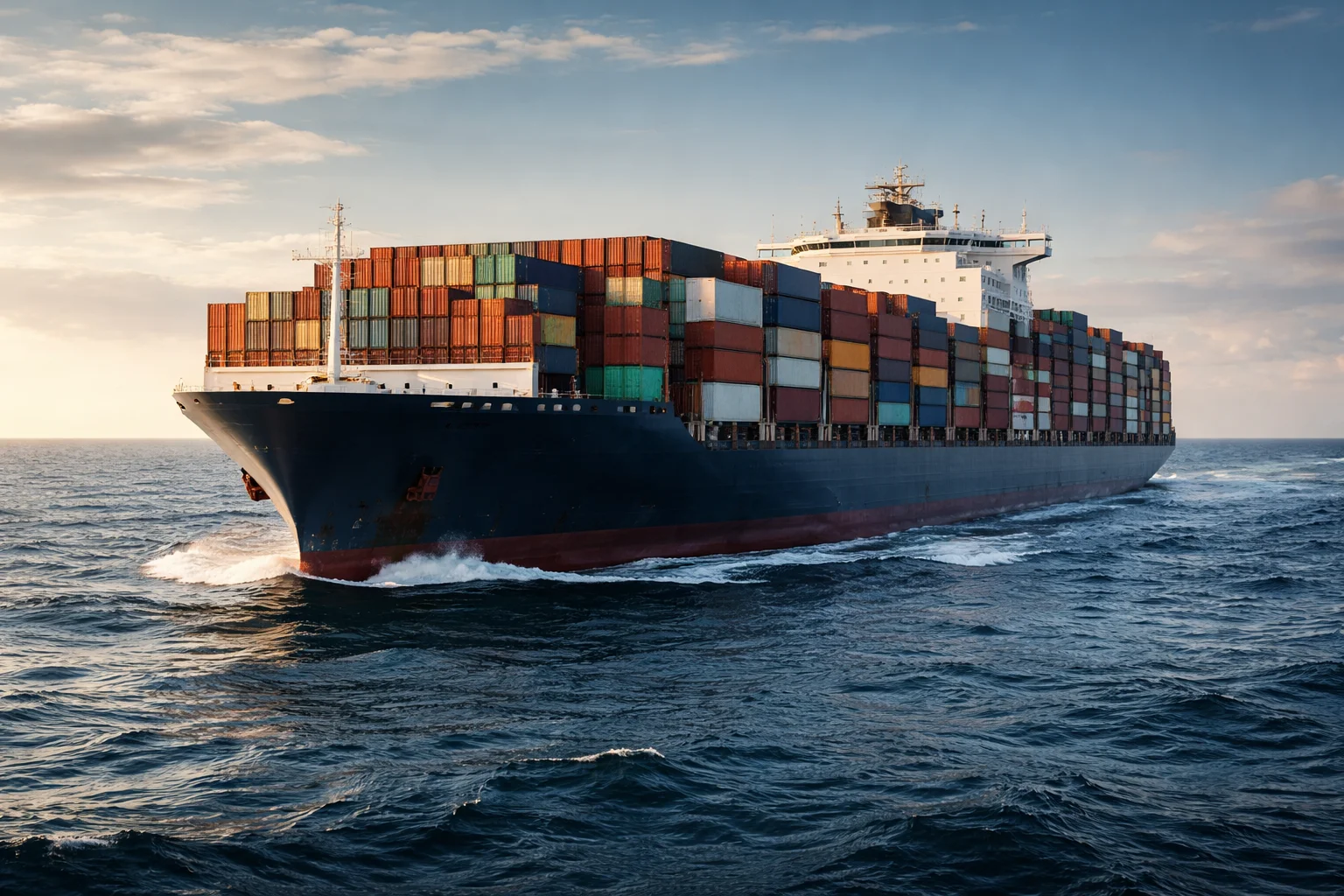
Planning, Tracking and Process Control in Sea Freight Operations
Success in sea freight transportation is achieved not simply by loading cargo onto a vessel, but by planning the entire operation correctly from the outset, managing all documentation accurately, and monitoring the process in real time. Each operation is tailored to the cargo type, required delivery timeframe, route structure, and delivery model.
Each sea freight operation is evaluated individually, taking into account variables such as cargo type, volume, tonnage, packaging, delivery terms, and points of origin and destination. Rather than following a standard booking approach, we develop a transportation plan tailored to the commercial and operational requirements of the cargo.
- Analysis of cargo type, volume, and technical requirements
- Determination of FCL, LCL, or specialized equipment requirements
- Planning of origin and destination ports and the delivery model
- Balancing cost, transit time, and operational risk
Selecting the wrong shipping line in sea freight transportation can result in significantly greater time and cost losses than initially expected. For this reason, each operation is planned not only based on price, but also by considering transit times, transshipment structure, port congestion, and carrier reliability.
For every shipment, the port of origin, destination port, transshipment points, and estimated transit time are evaluated in detail. The objective is not simply to ship the cargo, but to transport it according to a predictable delivery plan.
- Selection of the most suitable carrier and shipping service
- Comparison of direct and transshipment route alternatives
- Assessment of transit times and potential delay risks
- Development of the most suitable shipment schedule for the operation
Selecting the wrong container for a sea freight operation can lead not only to increased costs, but also to cargo damage, inefficient use of space, and operational delays. For this reason, transportation equipment is selected according to the physical characteristics of the cargo and the specific requirements of the operation.
In addition to standard container shipments, suitable equipment is planned for high-volume, sensitive, temperature-controlled, and oversized cargo. When required, operations are supported with specialized equipment and customized loading solutions.
- Standard container options such as 20DC, 40DC, and 40HC
- Temperature-controlled transportation planning with reefer containers
- Identification of Open Top, Flat Rack, and other specialized equipment requirements
- Equipment selection based on loading efficiency and cargo safety
One of the most common sources of error in sea freight transportation is the management of operational documentation and port coordination. When booking, shipping instructions, bills of lading, VGM, customs documentation, and port procedures are not managed in alignment, the entire logistics chain can be disrupted.
Redlog Global places documentation management at the core of each operation and coordinates the processes between the port, carrier, customs, and on-site teams in a controlled manner. This helps minimize the risk of delays, documentation errors, and additional costs.
- Management of booking and shipping instruction processes
- Coordinated management of bills of lading and shipping documentation throughout the operation
- Coordination of VGM, port entry, and terminal planning
- Document verification in line with customs and delivery procedures
Sea freight transportation does not end when the vessel departs. The real difference lies in maintaining shipment visibility while the cargo is in transit, planning the arrival process in advance, and preventing additional costs caused by delays after arrival.
For this reason, cargo movements are monitored throughout the operation, potential deviations are assessed in advance, and post-arrival processes at the destination port are carefully planned and managed. The objective is not simply to deliver the cargo to the destination port, but to ensure the continuity of the entire commercial operation.
- Shipment and milestone tracking throughout the operation
- Proactive management of ETA changes and potential delay risks
- Post-arrival pickup and delivery planning at the destination port
- Minimization of demurrage, detention, and waiting costs
Why Redlog Global?
One of the biggest mistakes in sea freight transportation is evaluating an operation solely based on freight rates. True success depends on proper planning, suitable equipment, the right shipping line, accurate documentation control, and end-to-end visibility throughout the entire process.
Redlog Global approaches sea freight operations not simply as transportation arrangements, but as a process management discipline that directly impacts business continuity. This approach enables shipments to progress in a more predictable, controlled, and secure manner.