
Lojistikte Hız, Operasyonda Güven
Choose the transportation model that best suits your needs and explore the details.
Warehousing services are not simply about keeping products in a designated space. Without proper planning, inventory confusion, product loss, operational delays, shipping errors, and increased costs can become inevitable. That is why warehousing is not a passive stage of the logistics chain, but a critical management function for ensuring speed, accuracy, and sustainable operations.
Redlog Global not only stores your products in a secure environment but also manages receiving, placement, inventory tracking, order preparation, dispatch management, and operational planning within a single integrated system. This transforms warehousing from a cost burden into a strategic advantage that enhances your operational efficiency.
Whether you require short-term or long-term storage, project-based warehousing, or regular ongoing operations, we provide flexible solutions tailored to your cargo type, volume, and business model.
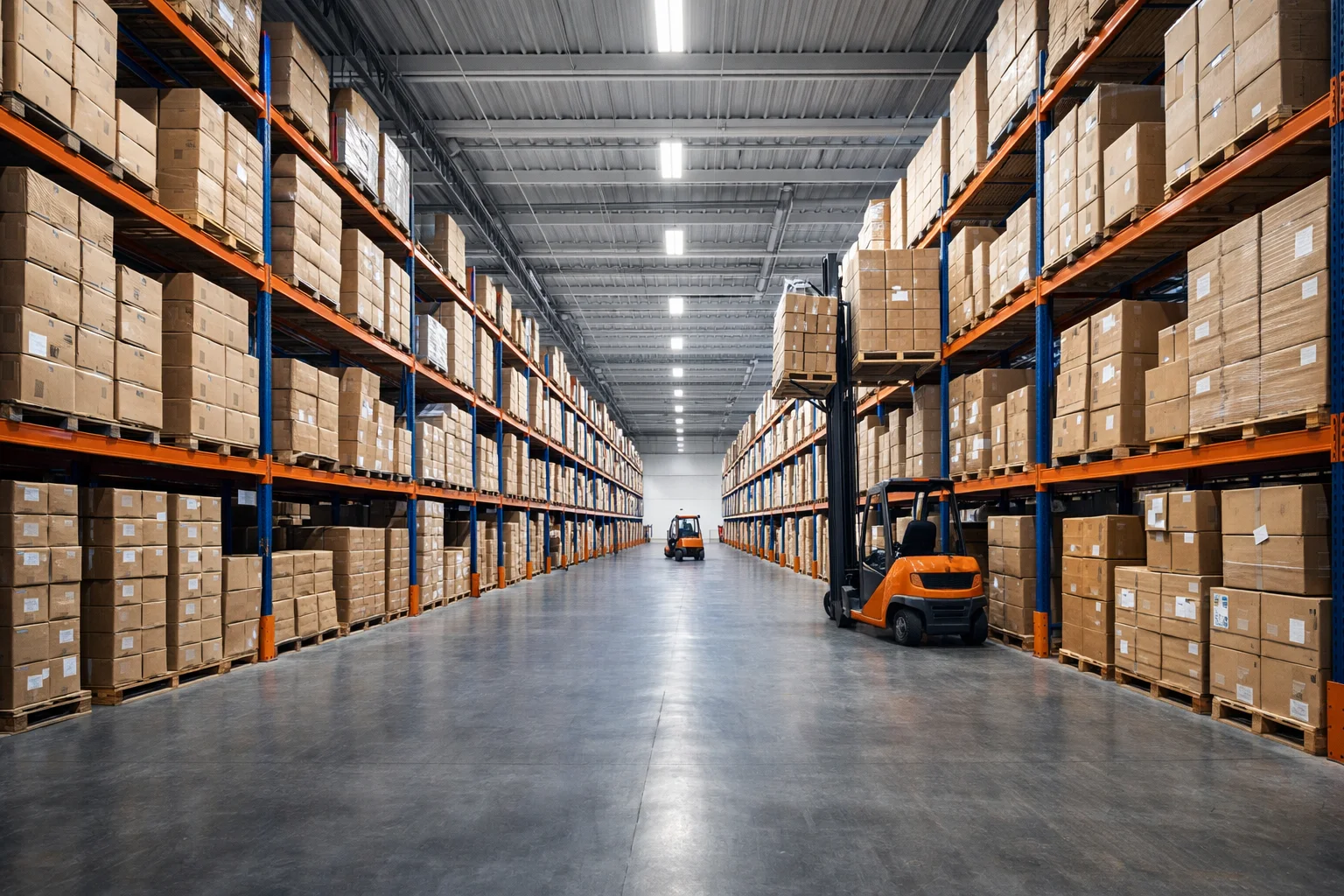
A successful warehousing operation requires the effective management of space utilization, inventory accuracy, fast access, product safety, and shipment preparation. Not every product is stored in the same way, and every business has different requirements. Therefore, the warehousing structure should be specifically planned to align with the operational workflow of each business.
The first and most critical stage of warehousing services is ensuring that products are received correctly and accurately recorded in the system. Any error at this stage can lead to a chain of problems throughout the entire operation. Incorrect counts, incomplete records, or improper placement can result in inventory discrepancies and delivery issues.
Redlog Global manages product receiving processes in a controlled and systematic manner, ensuring that incoming products are accurately recorded and properly placed according to their quantity, condition, and storage plan.
One of the biggest sources of inefficiency in warehousing is the unplanned use of space. When products are not properly classified, access becomes more difficult and operations slow down. This results in unnecessary labor costs, wasted time, and shipment delays.
For this reason, storage areas are organized according to product type, turnover frequency, volume, and operational intensity. The goal is not simply to fill available space, but to use it intelligently to streamline and accelerate operational workflows.
If you provide warehousing services but lack inventory visibility, you are essentially managing problems rather than managing a warehouse. If the location of each product, the quantity remaining in stock, and its readiness for shipment cannot be clearly tracked, the entire operation becomes unreliable.
Redlog Global keeps inventory processes under control, ensuring that product movements are more traceable, organized, and efficiently managed. This simplifies operational planning while helping reduce the risk of errors.
The warehousing process creates value not simply by keeping products on shelves, but by ensuring they are prepared for dispatch correctly and at the right time. Even minor errors during order preparation can lead to customer dissatisfaction, increased return rates, and operational losses.
For this reason, product picking, sorting, packaging, and shipment preparation must be carried out in a controlled and systematic manner. Redlog Global manages dispatch processes with the right balance of speed and accuracy, helping strengthen overall operational quality.
Every business has different warehousing requirements. Some operations are regular and long-term, while others require support for seasonal peaks, promotional campaigns, import volumes, or project-based workflows. A fixed warehousing model does not always deliver the right results.
For this reason, warehousing services should be structured flexibly according to product characteristics, seasonal volumes, and the business model. Redlog Global provides scalable warehousing solutions designed to adapt to changing operational requirements.
Providing storage space is easy. The real challenge is transforming that space into an organized, controlled, and reliable operational center. It is not simply about storing products; they must remain easily accessible, properly managed, and ready for shipment whenever needed.
Redlog Global approaches warehousing as more than just the allocation of storage space. We manage the entire process holistically, with a focus on inventory control, operational discipline, shipment preparation, and business continuity. This approach enables more organized operations and a stronger, more reliable supply chain.